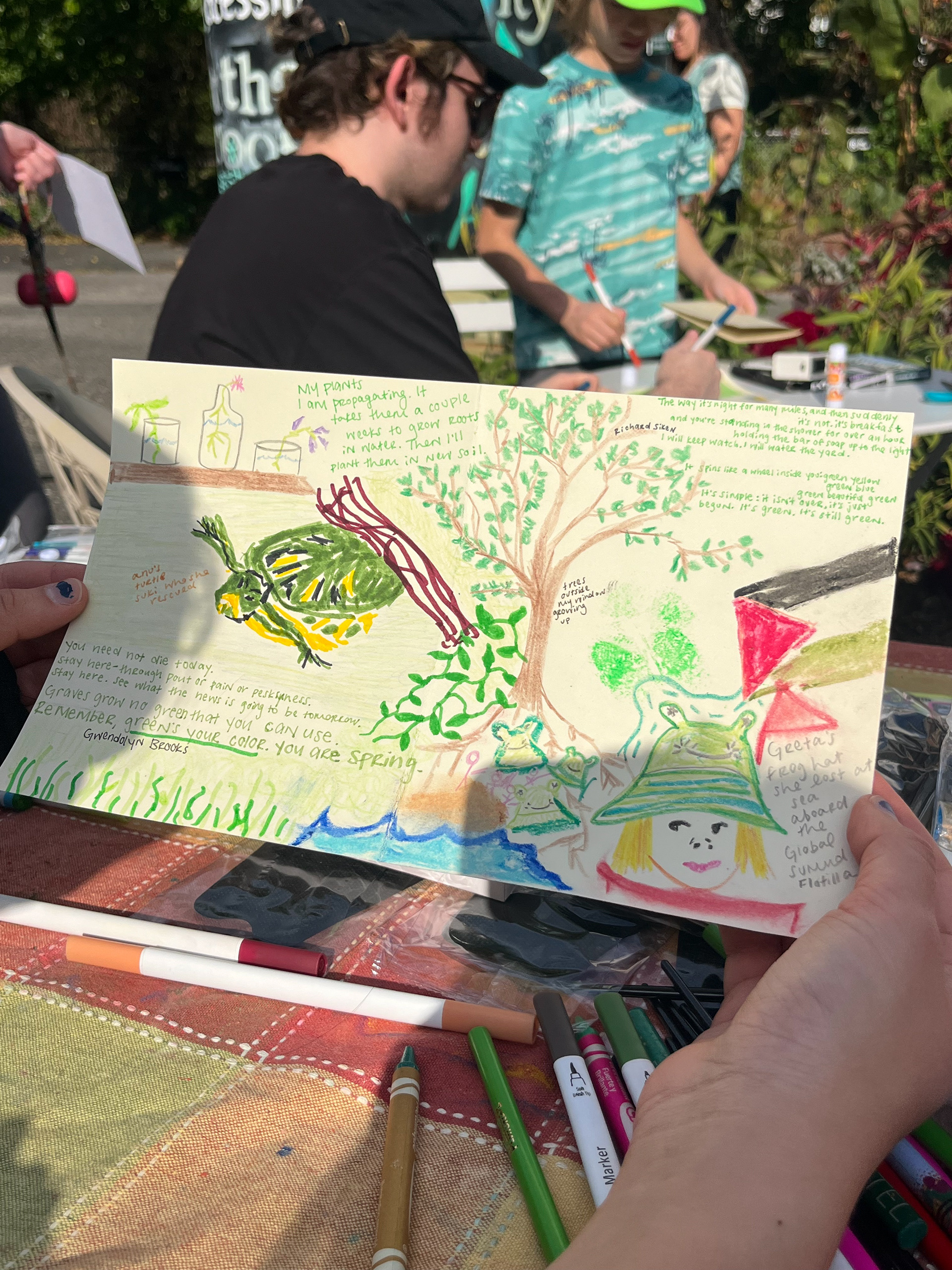
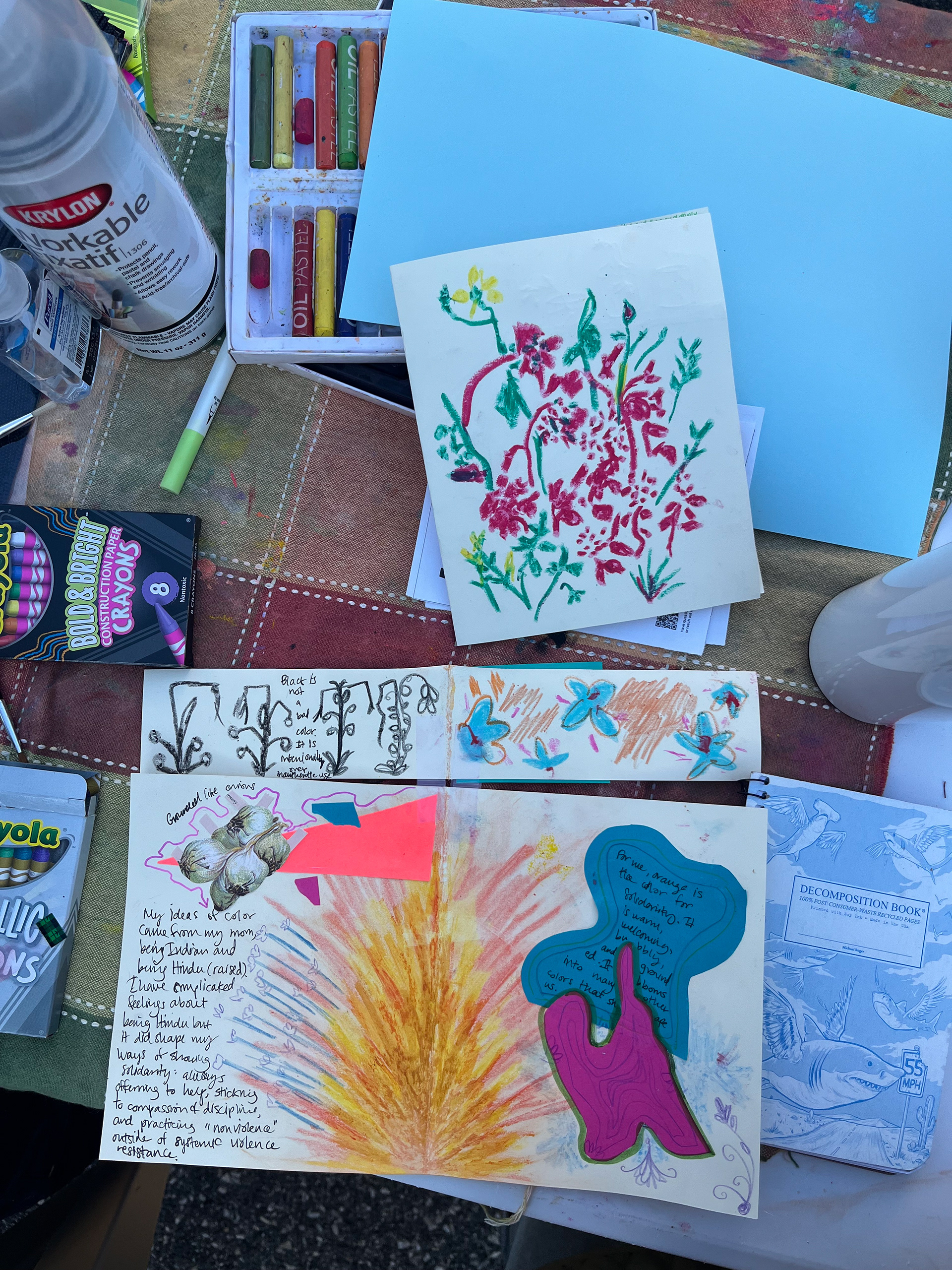
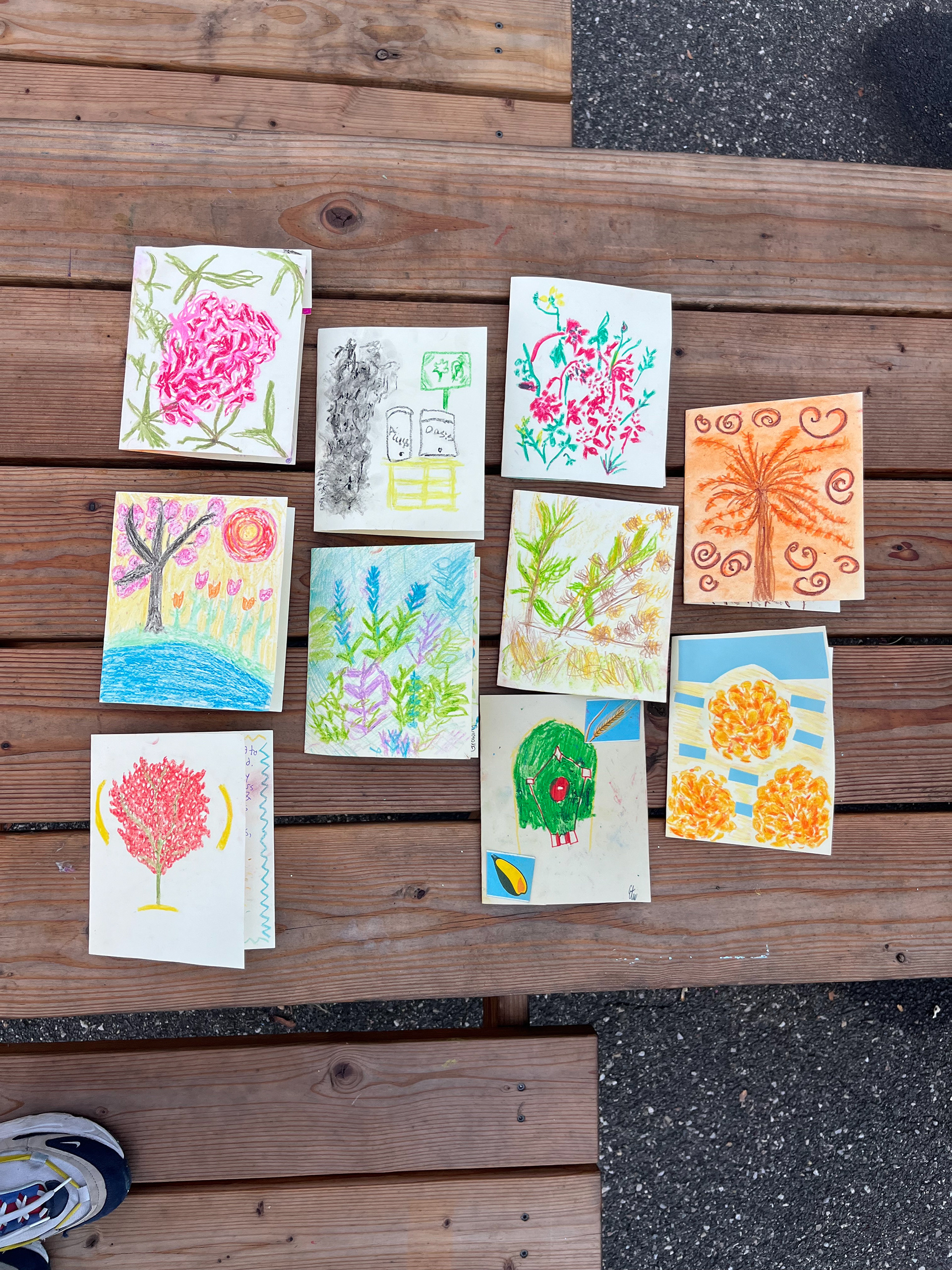
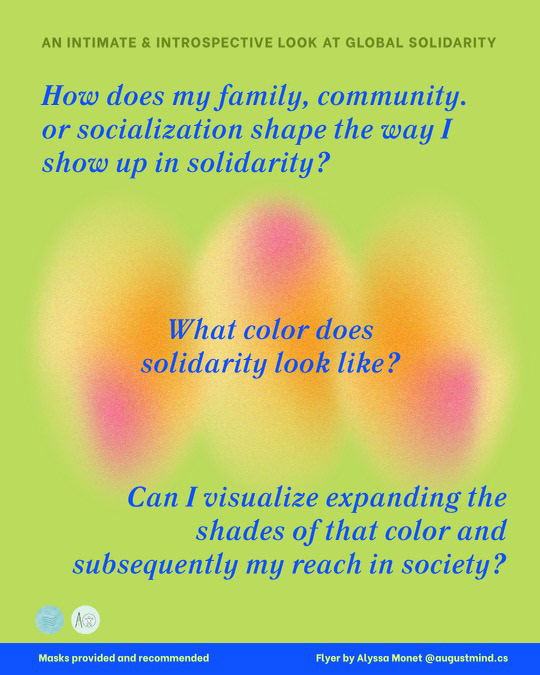
This participatory workshop examines color as a political and historical formation rather than an aesthetic choice. Drawing from colonial textile history, commodity fetishism, and spatial theory, participants investigate how contemporary ideas of minimalism, professionalism, cleanliness, and personal taste are shaped by colonial and capitalist regimes of control. Color is not decoration. It is a technology of governance. Through guided drawing exercises and structured dialogue, participants experience how their own color preferences have been socially produced and how aesthetic experimentation can function as a micro-practice of dissent.
Theoretical Framework
This workshop is grounded in:
The British East India Company’s systematic dismantling of India’s textile industry in the 18th–19th centuries.
The strategic use of vibrant Indian textiles in the transatlantic slave trade.
The production of tikats (textile labels) that fetishized “Indian” aesthetics while obscuring colonial violence.
Michael Taussig’s work on commodity fetishism.
Brian O’Doherty’s theory of the “white cube” as a spatial manifestation of ideological neutrality.
Chromophobia as a historical aversion to color linked to narratives of “civilization” and refinement.
European philosophers such as Goethe argued that “refined” people avoid vivid colors, while colonized societies were cast as excessive and childlike in their embrace of brightness. These discourses were not incidental; they were necessary to culturally devalue thriving color-based economies before dismantling them. Contemporary minimalism such as white walls, neutral palettes, industrial design or the “clean girl” aesthetic, extends this disciplining of color into everyday life. The less color a society can tolerate, the less dissent it can tolerate (or can it?)